
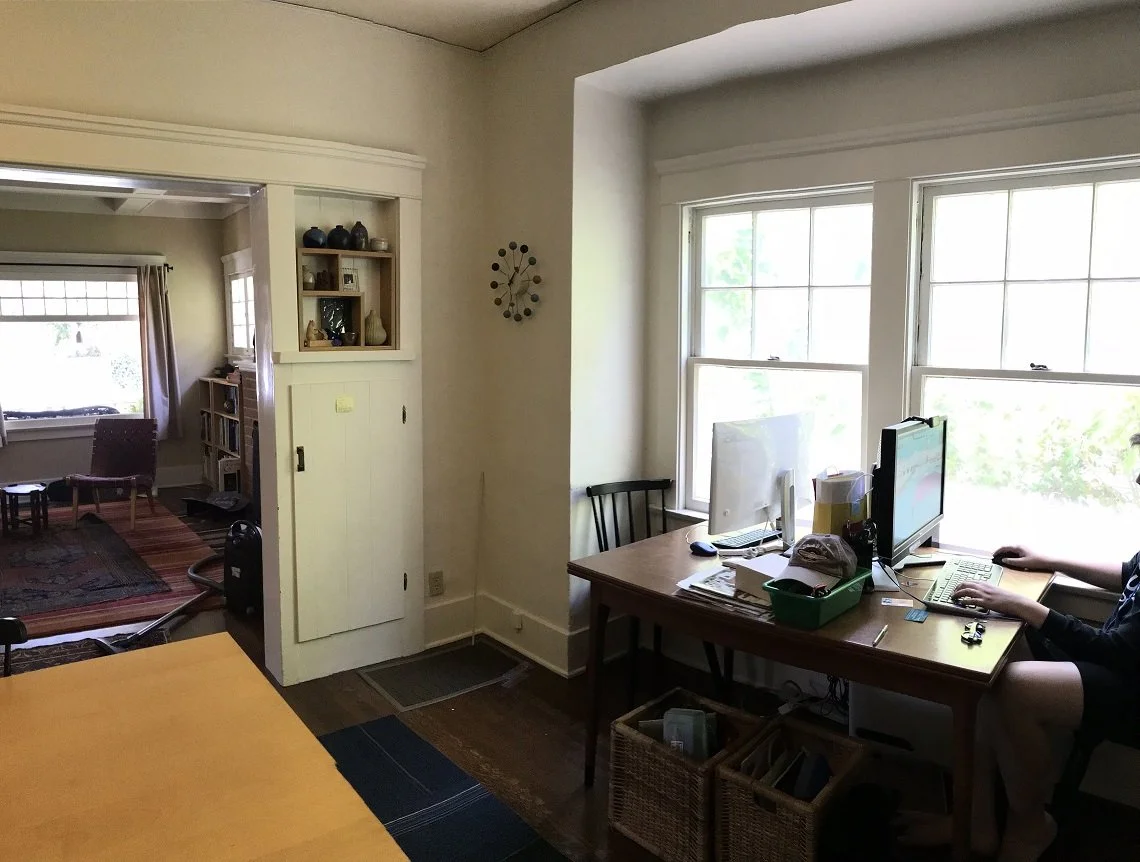
The dining room saw the biggest change in features and character of all the original rooms, transforming from a plain, white space with no personality to something special that’s now the heart of the house. I also notice that before, the room was filled with stuff to give it some color and personality, but now it doesn’t seem to need so much. And this was a cluttered time in our lives, with the big dining table in the center and the small homework/computer table squeezed against the window (which also made a nice kids’ table for dinner parties).
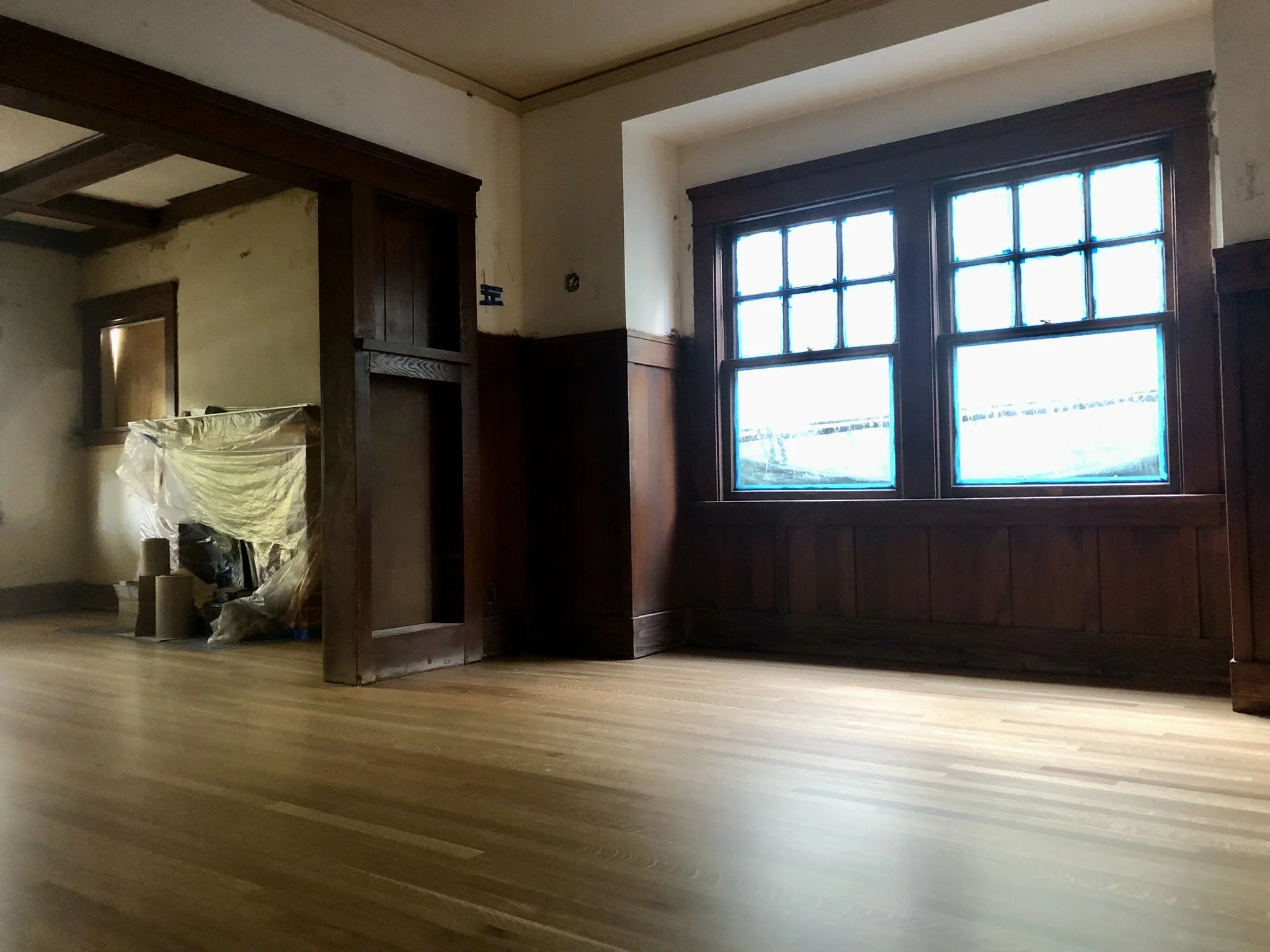
In Sept. 2022, the new floors were installed and the staining of the old (around doorway and windows) and new (wainscoting) wood features had been completed.
This room was the ideal place for a little wallpaper moment. We started out with the idea of something with a lively pattern, but all monochromatic and neutral. William Morris’s “Marigold,” below, was that first choice.
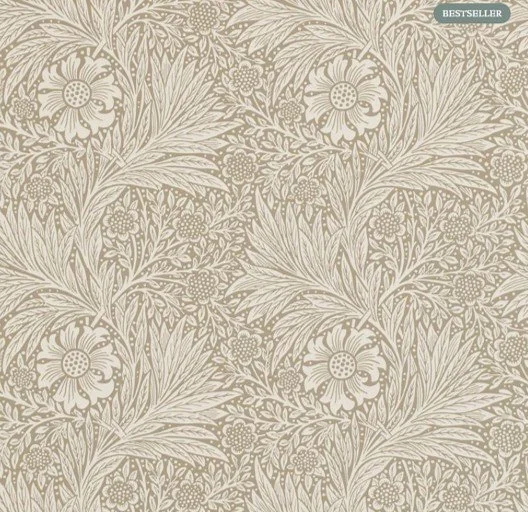
But somewhere along the way, our color consultant suggested that we could go with some stronger colors in there, and we ended up somewhere completely different. Rather than linking the room visually to the lighter and more neutral kitchen colors, we wanted it to have its own character and relate more to the living spaces. This was a more historically aligned approach anyway, although we did elect to keep the wall between the dining and kitchen largely open. Originally, that would have been a solid wall with a built-in hutch and a swinging door to get into and out of the kitchen.
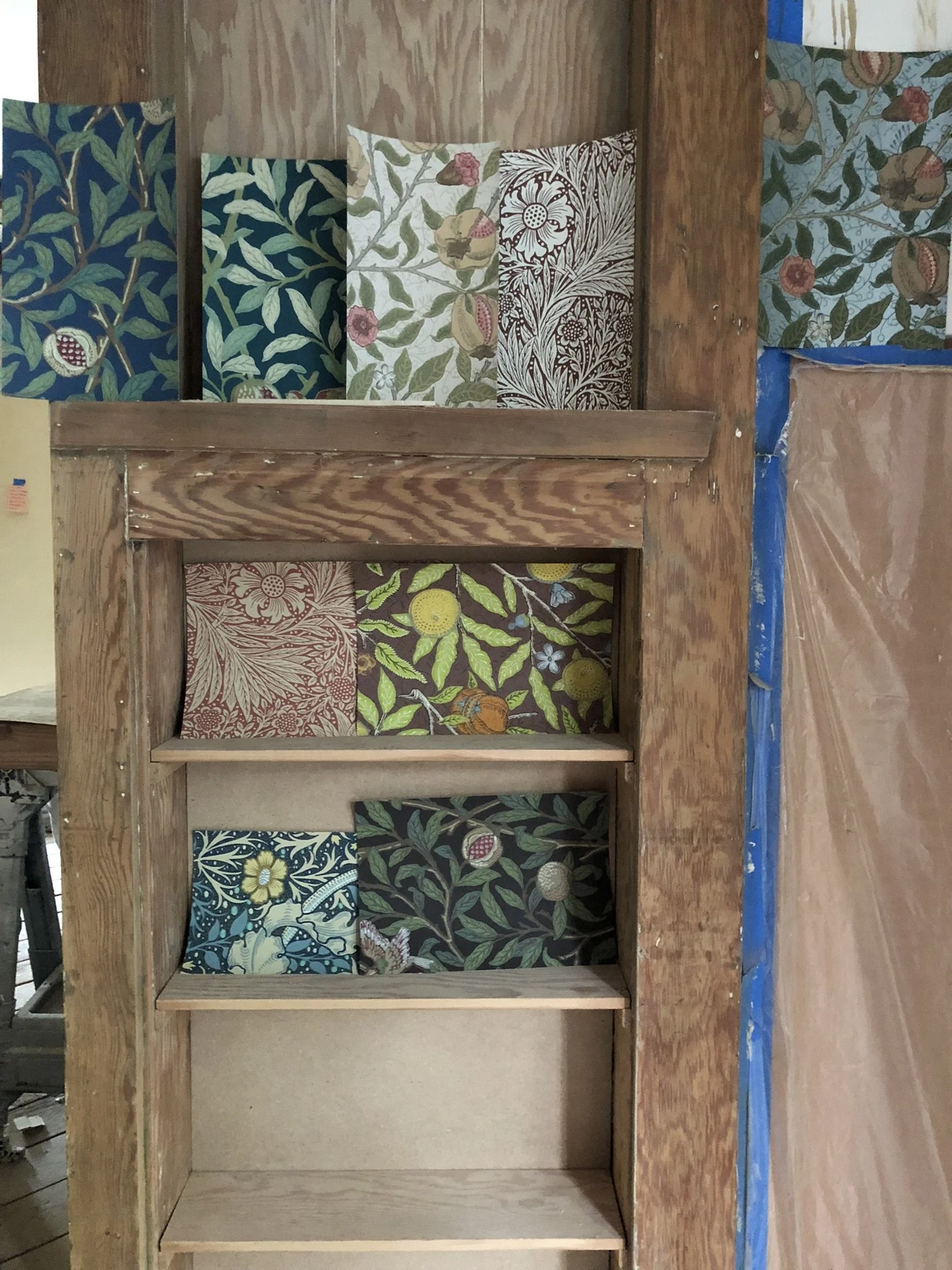
Evaluating wallpaper choices — all Morris & Co. designs. You can see here how rough the appearance of the wood was once it was stripped. This was another “what have we done??” moment, as you can imagine. But it all worked out in the end.
William Morris (1834-1896) remains the reigning god of wallpaper, as far as many of us are concerned. This was only one of many endeavors he occupied himself with; printing, bookbinding, weaving (becoming an expert on medieval textiles), poetry, and socialist politics were a few of the others for which he was best known. He dreamed that people could learn meaningful and rewarding handcrafts and live in equity and harmony making beautiful things for society. He was the father of the Arts and Crafts movement in Britain and wanted to save us all from poorly designed, manufactured crap. In the end, of course, crap won out in a big way, and he learned the hard lesson that it’s just not possible to produce things this way at the kind of scale he wanted, meaning that the cost was out of reach of the vast majority of people. But his designs for fabrics and wallpapers remain popular and in production today. “Paper the walls in fruitful abundance,” Morris & Co.’s website urged us, “in this early 1864 William Morris design and watch as pomegranates, peaches, and fruit blossoms ripen and bloom.”
Once the wood was stained (it was a long, painstaking process to get the new wood to match the old trim in the room, but they were determined, and they got it right), the wallpaper was installed!
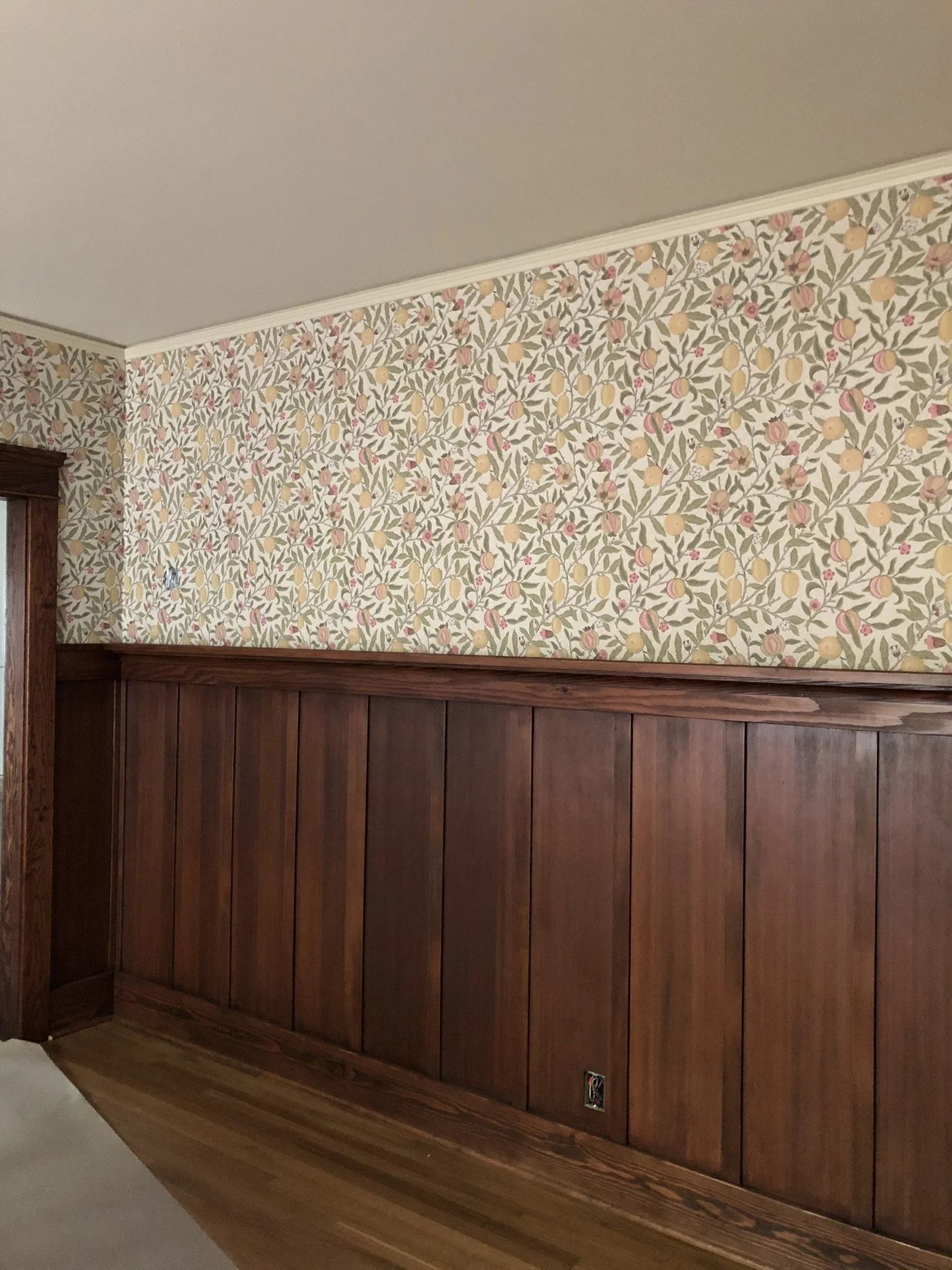
We selected “Fruit” in the limestone/artichoke colorway. Our brilliant color consultant paired it with a ceiling matched to a Farrow and Ball color that perfectly matches the ground color of the wallpaper, and it all came together in a magical way, setting the tone for a very comfortable, cohesive, and warm room.
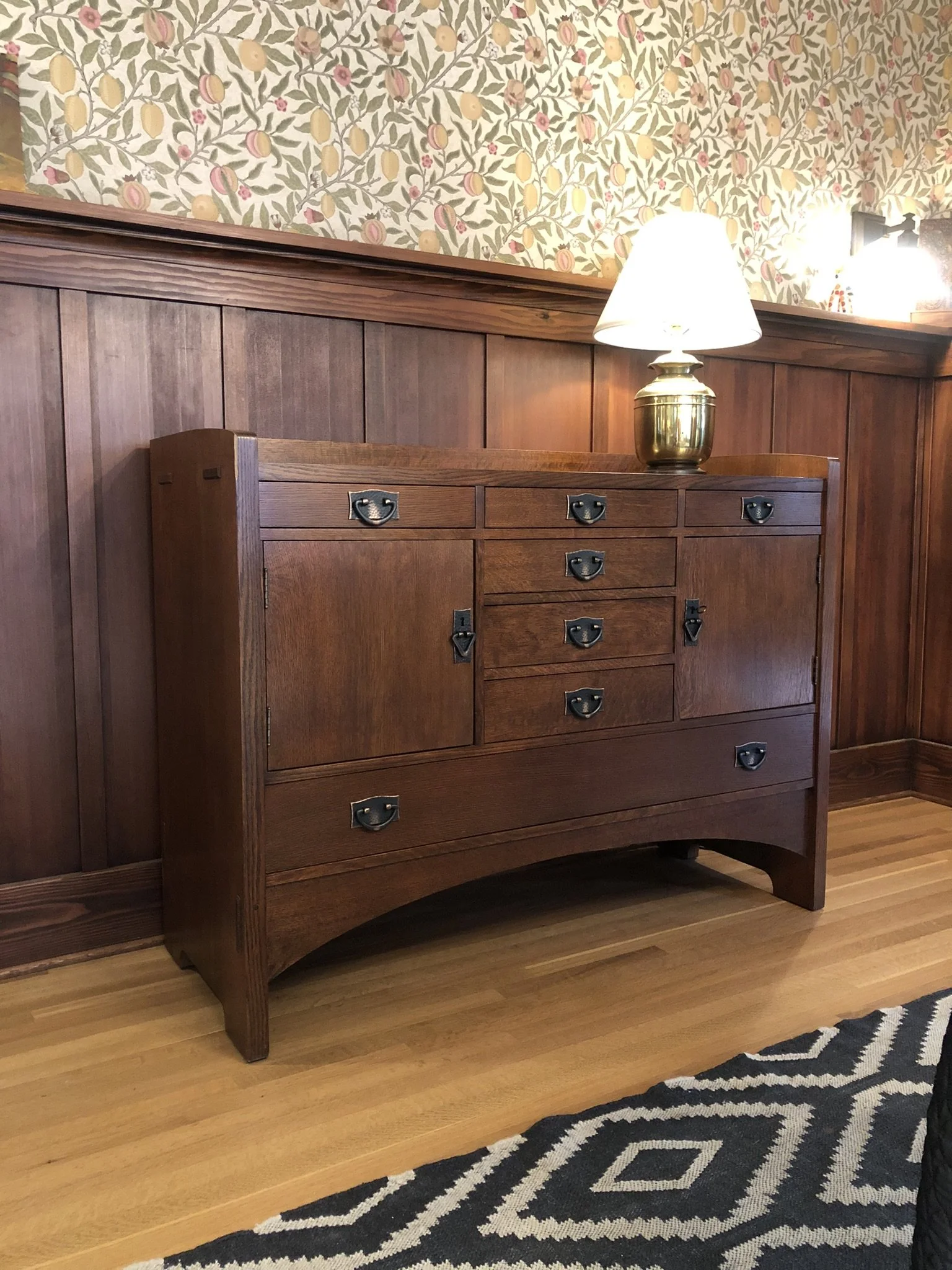
What a find!
We originally hoped for a whole wall of bookcases with cabinets below, but that idea did not pan out for space and cost reasons. Still needing storage, I was looking at auctions and estate sales for a good sideboard, and I found a Stickley reproduction, used, for a very small fraction of what it would have cost new. It also would have taken me forever to find the right antique one. That day, upon seeing it at an estate sale, I realized that it would be half the price *IF* it was still there the next day, and I thought, I’m not pressed — I can gamble a little!
So I went back at 7:30 the next morning when they opened, and sure enough, it was still there. I had a moment of panic about how to get it home, which had to happen by 1:00 or so when they closed down the sale. I hurriedly texted some friends with a truck who are dedicated estate-sale-goers, and they jumped right on it. I bought the piece for $900, and we came back a few hours later, when it took several people and a wheeled cart to get this massive, solid-oak piece into the truck. At home, we three middle-aged adults and a teenager managed to get it inside with a little cleverness and sheer determination. We were pretty proud of ourselves.
And with that, the groundwork for the dining room was complete. In the nearly four years since then, the rug we’d had in the living room for 8 years has proved just fine for the space. We have toyed with getting an oak dining table, maybe some Stickley chairs, thinking that it would be lovely to properly complete the room. Given the cost and the required legwork to find the right thing, we have simply lived with our apartment-sized Danish teak table, which has never been wide and generous enough for what we wanted. Maybe some day in our next house we will have a table like that.
For now, it’s a beautiful room — with a really fresh 162-year-old wallpaper design!
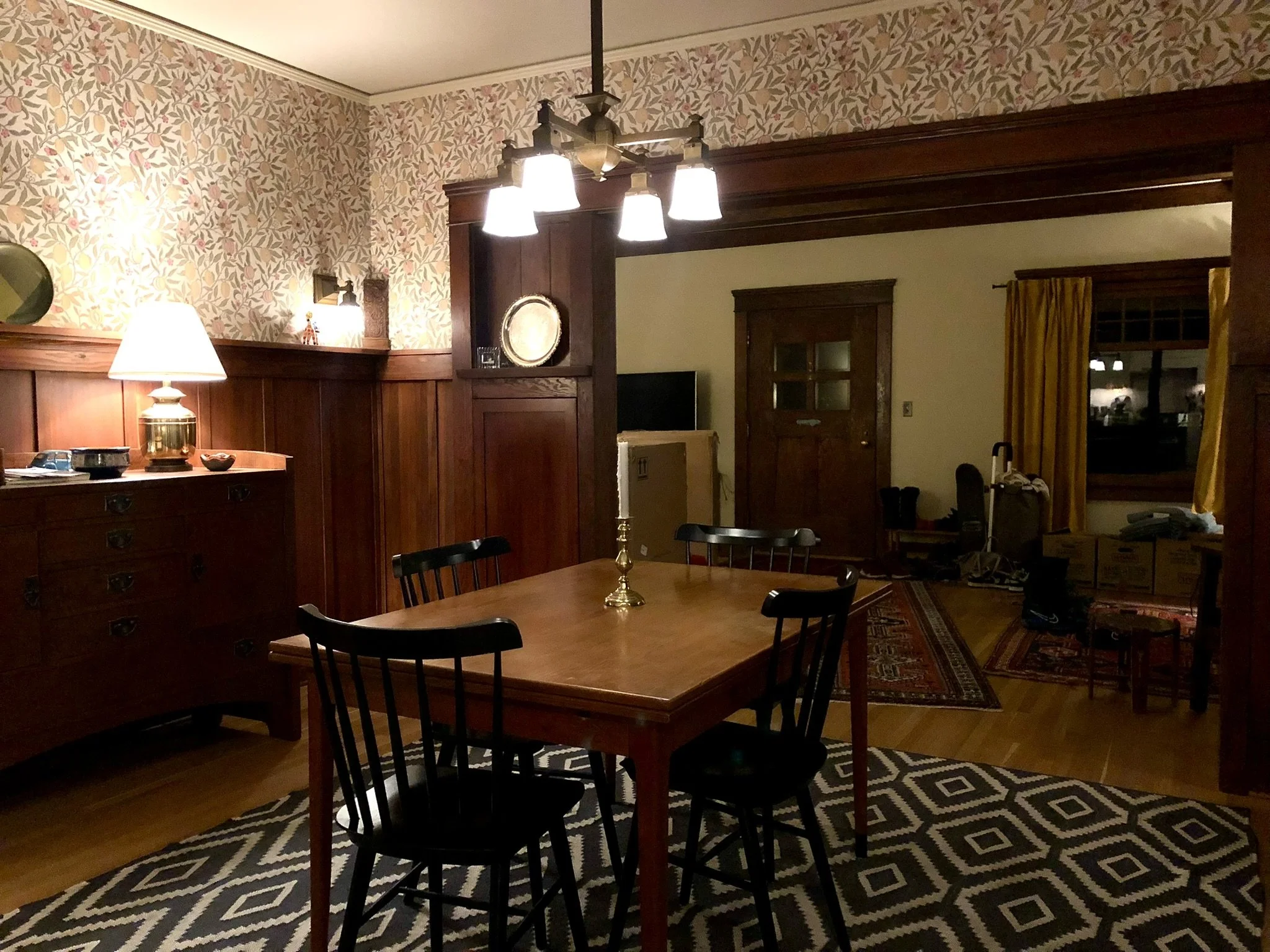
Early days, when the living room (beyond) still had lots of unpacked boxes.